Nature is the Remedy
(And Why Rampant Digital Addictions are an Existential Threat to Civilization and the Planet)
By Ken Wu
As 2025 comes to a close, I wanted to address the core issues afflicting humanity and the planet, which are essentially the result of our industrial society gone amok, and why nature is an indispensable remedy to the ailments of industrial society. Note that this essay starts off as bleak, but is ultimately hopeful.
Most of our supporters here will already know that our futures are threatened by both the extinction crisis (with over a million species across the planet projected to go extinct over ensuing decades) and the climate crisis, with droughts and floods diminishing agricultural productivity, heightening inflation, driving mass migration, expanding human conflicts, burning down forests and acidifying oceans. You already know this.
A public health crisis is also sweeping the West, in the form of increased rates of obesity, inflammation, various types of cancer, cardiovascular disease, autism, anxiety, depression and much more.
And economic concerns are particularly top of mind for many or most Canadians right now, worried about inflation, the high cost of living, the impacts of Trump’s tariffs, and unemployment.
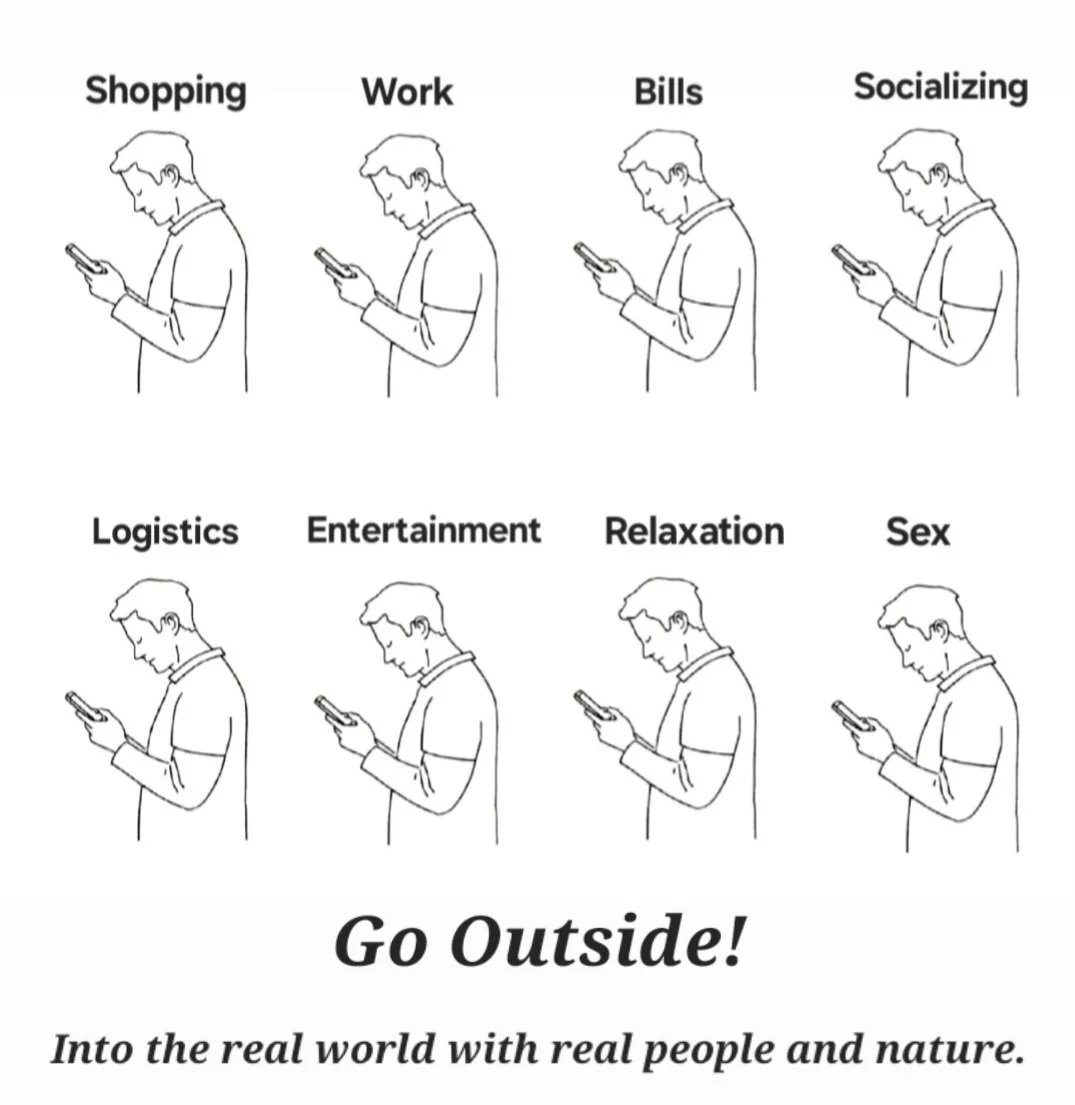
In addition, I believe – and this may be surprising to some people - that an existential threat to civilization is the rampant, large-scale online addiction to smartphones and computers that has swept the industrialized world, particularly over the past 15 years. Our addiction to the digital online world of images – instead of our connection to the real world of nature and real people – exacerbates all of the aforementioned problems in various ways.
But hold on – sure, smartphone and digital addictions can’t be healthy, but are they an existential threat? How so?
Let me explain.
Let’s be clear, I’m not talking about the general existence of cell phones, computers, social media and the internet per se. They are here to stay (yes, I am typing this on a computer, not on a stone tablet). But it’s the rampant, unmodulated, unregulated addiction to digital devices combined with the internet that is the issue, and that exacerbates the forces destroying nature and the climate (I will explain in a moment).
Our brains don’t know the difference between what we see in the real world and what we see online - which is basically anything we want to see these days. We essentially now have the universe in our pockets – as if that isn’t addictive, like having a flask of vodka or packet of cocaine on you at all times. It may be right there - just don’t really use it much.
Over the past 15 years – in particular since the advent of smartphones – research shows that widespread anxiety, loneliness and misery are sweeping the people of the western world, addicted to their phones and video games, social media, short video clips, and the internet in general. So much so that many of today’s youth are barely even going out to party or drink with friends on Friday and Saturday nights these days, let alone going into nature. Instead they’re hanging out at home on their phones and game consoles. Late-night restaurants have largely disappeared since the pandemic due to a lack of clientele, even in a hip city like Montreal. And today it’s not just the youth, but many or perhaps most people who are addicted online now.
What are the impacts of a digitally addicted indoor culture increasingly disconnected from nature and real people?
Mass anxiety, poor sleep, increasing loneliness - because digital connections don’t cut it to create the genuine human connections that we evolved with in-person as a social species, deepening depression, greater social dysfunction, diminishing empathy, increasing resentment for some, a disconnect from nature and all its benefits, and a diminishing depth of environmental awareness and connection (upon which our ultimate fates hinge).
We’ve created an addicted, unwell, indoor society increasingly divorced from nature, real people, and the real world.
And miserable, lost and isolated people tend to be more susceptible to the mountains of misinformation, deliberate falsehoods and nutty conspiracy theories that stoke more grievances, particularly among lonely young and middle-aged, single males. This vast disinformation pipeline of bullshit, including climate denial, anti-science, anti-environmental and bigoted, far-right, anti-democratic propaganda fueling the ascendancy of governments that are plunging the world towards the ecological brink, is driven by the internet and social media consumed via smartphone addictions.
At a time of an existential ecological crisis, much of our population is busy scrolling on their devices led astray by algorithms and social media silos down nonsense conspiracy rabbit holes and away from understanding the real causes of their problems and their solutions, leaving those seeking to profit from destroying the planet and democracy largely free to rampage on.
Thus we seem to be entering an era of increasing ecological collapse, mass conflict, and civilizational breakdown.
But protecting nature and the movement to protect nature gives us the greatest hope.
Why is nature a foundational remedy to the problems of industrial society?
Starting with the extinction crisis, protecting nature is vital for obvious reasons. No need to go much into that here, except to note that at its core we need to ensure that governments prioritize protection for the most endangered, least protected ecosystems - rather than skirting around protection of the ecosystems most coveted by industry (such as the classic “Save the small trees, log the big trees” approach in BC, for example) and to ensure that protected areas are real protected areas without flexitarian standards (i.e. that keep out the big threats to ecosystems – commercial logging, mining, oil and gas development, agricultural conversion and urbanization). These are issues of course that the Endangered Ecosystems Alliance is always dealing with.
Protecting nature is also vital to solve the climate crisis, as successive governments have inadequately reduced emissions to the extent that we now can only meet our international climate targets if we draw down vast amounts of atmospheric carbon into protected forests, wetlands and grasslands while we reduce emissions. Nature is the best carbon capture and storage device around.
Regarding our health and well-being: more doctors are prescribing time in nature due to the dramatic improvements to our psychological and emotional well-being when we are in it, which then acts back to reduce all manner of physical ailments, along with the exercise we undertake while in nature.
In addition, science shows that simply breathing in the air in forests and nature boosts our immune systems to remove virus-infected and cancerous cells from our bodies. This is due to plant compounds in the air, known as “phytoncides” that we breathe in and which stimulate our bodies to produce NK cells to protect us.
We also pick up the greatest diversity of beneficial bacteria when we’re in nature to add to our increasingly deficient “microbiomes”. This is a frontier of science which increasingly reveals that our obsession with over hygienic indoor environments and lifestyles, the overuse of antibiotics that massacre the bad but also the good bacteria in our bodies, and our lack of connection to nature, is greatly diminishing the “ecosystems within” our bodies - the beneficial bacteria that counteract allergies, diverse types of inflammation, many types of cancer, cardiovascular disease, autism, and seemingly just about every type of ailment in some way. Getting dirty in nature turns out to be good for us.
Regarding the economy: contrary to the tired, old narrative that saving forests and protecting nature will destroy the economy, numerous studies and the experience of communities throughout the world show that the expansion of protected areas tends to attract and support a greater diversity of prosperous industries that result in a greater net benefit to the local and regional economies. When major protected areas are established, a whole plethora of industries thrive, in tourism, recreation, real estate, construction, diverse businesses dependent on skilled labour (workers drawn to the higher environmental quality of life that protected areas provide), non-timber forest products, and carbon projects — and all the while benefiting from the ecosystem services these areas provide (e.g. clean water and habitat that support commercial and recreational fishing).
We need an economic strategy that speeds up this natural economic transition process and facilitates the sustainable modernization of industry away from the dirty, destructive, sunset industries, and into ones with lower land use and climate footprints but with greater productivity and profitability.
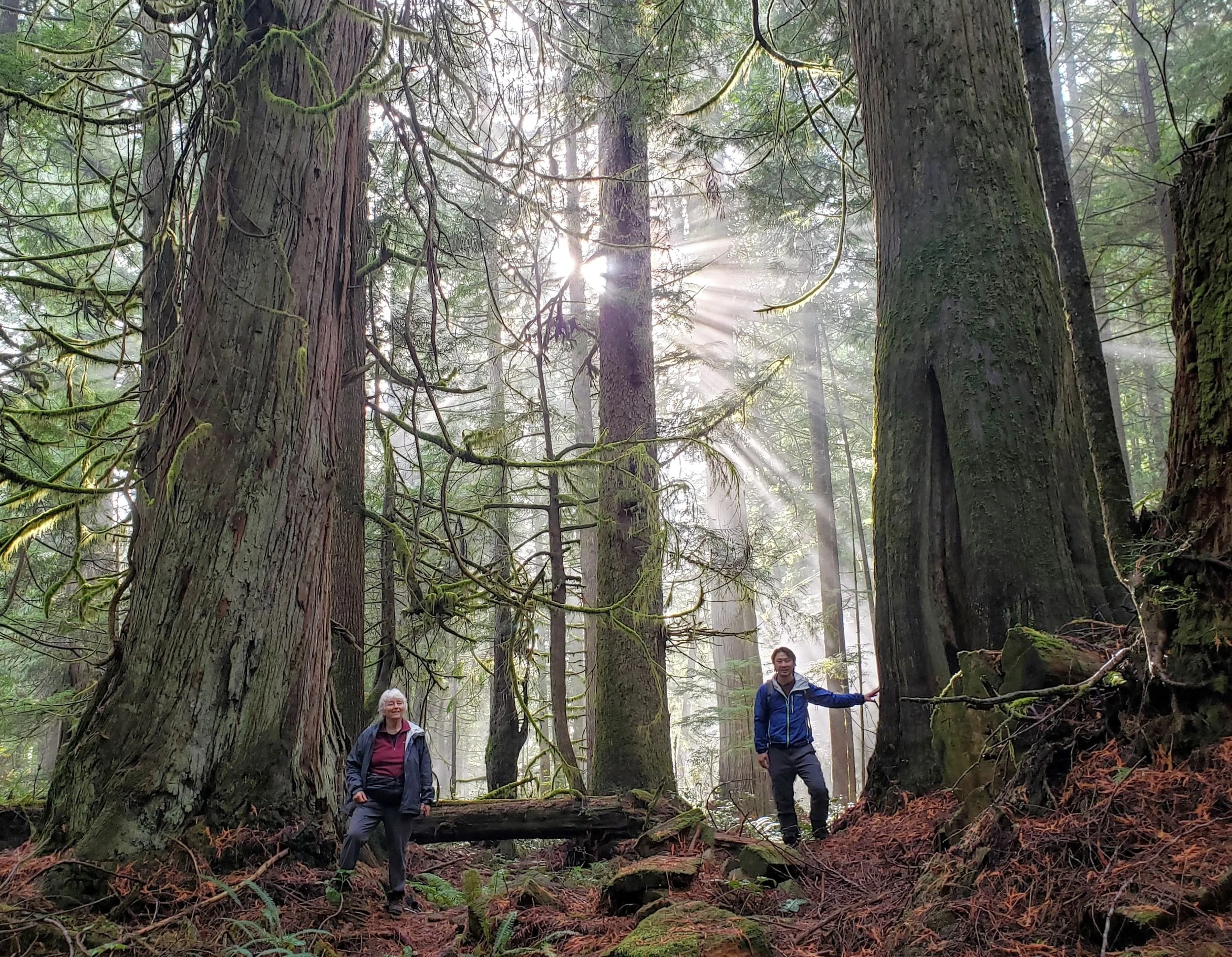
Time in nature also counteracts the effects of online cell phone and computer addictions. Going into nature – into the real world – is a reconnection with the community of life and the forces that shaped our evolution over millions of years that we have only recently become disconnected from in biological time. It’s similar to reconnecting with an “old friend” that we grew up with and that we need, in evolutionary terms, hence we feel better in nature, our old friend. Time in nature counteracts the anxiety, inflammation, sterile environments and lack of exercise that characterizes indoor scrolling and digital addictions. Studies show that time in wild areas in particular (people often use their phones more in city parks) significantly reduces time on our phones, and there are big parts of Canada’s wilderness areas where there is no wifi – and yet a greater connection to the real world will be had by those being there.
Time in nature is also a reason to go out with friends in person, removing the separation and distance that comes from relationships over digital devices. Real people in nature in the real world are exceptionally therapeutic in this day and age, and unfortunately, increasingly rare, especially for younger generations. Governments need to undertake organized campaigns to help people understand the importance of and to facilitate getting outside into nature with other people, in addition to regulating smartphone and social media use in schools and for minors.
Of course, nature alone won’t solve all of these problems. But it is a foundational part of the solutions - and only if we protect it. Time is running out to protect endangered ecosystems across the world.
Lastly, the movement to protect nature itself is part of the remedy for these problems, for several reasons. Concern for nature cuts across the political spectrum, from left to right, because the need to connect to nature is part of our biology, in our DNA. If the environmental movement wisens up and learns to engage non-traditional allies outside of its activist base, including businesses, unions, faith groups, and outdoor recreation groups, and undertakes multicultural outreach in the large cities, as well as works with First Nations to protect ecosystems in their territories (including in tangible ways, such as with conservation financing in lieu of their often significant economic dependencies on industrial resource extraction industries) we could reach most people. A movement involving millions beyond our typical activist base, that helps to protect nature, gets out into nature including socially with others, and over time, expands and deepens their consciousness about ecosystems, science, democratic social change, and increasingly learns to see things from the perspectives of the diverse co-participants in their movement for nature, would transform society and could even save it.
This is the agenda of the Endangered Ecosystems Alliance. It is a tall order.
But in a time when hope can feel scarce, it brings hope to the table.
Ken Wu is the executive director of the Endangered Ecosystems Alliance, and previously was the co-founder and executive director of the Ancient Forest Alliance and the Victoria campaign director for the Wilderness Committee. He has worked to protect old-growth forests and endangered ecosystems in BC and Canada for over 30 years.